


















































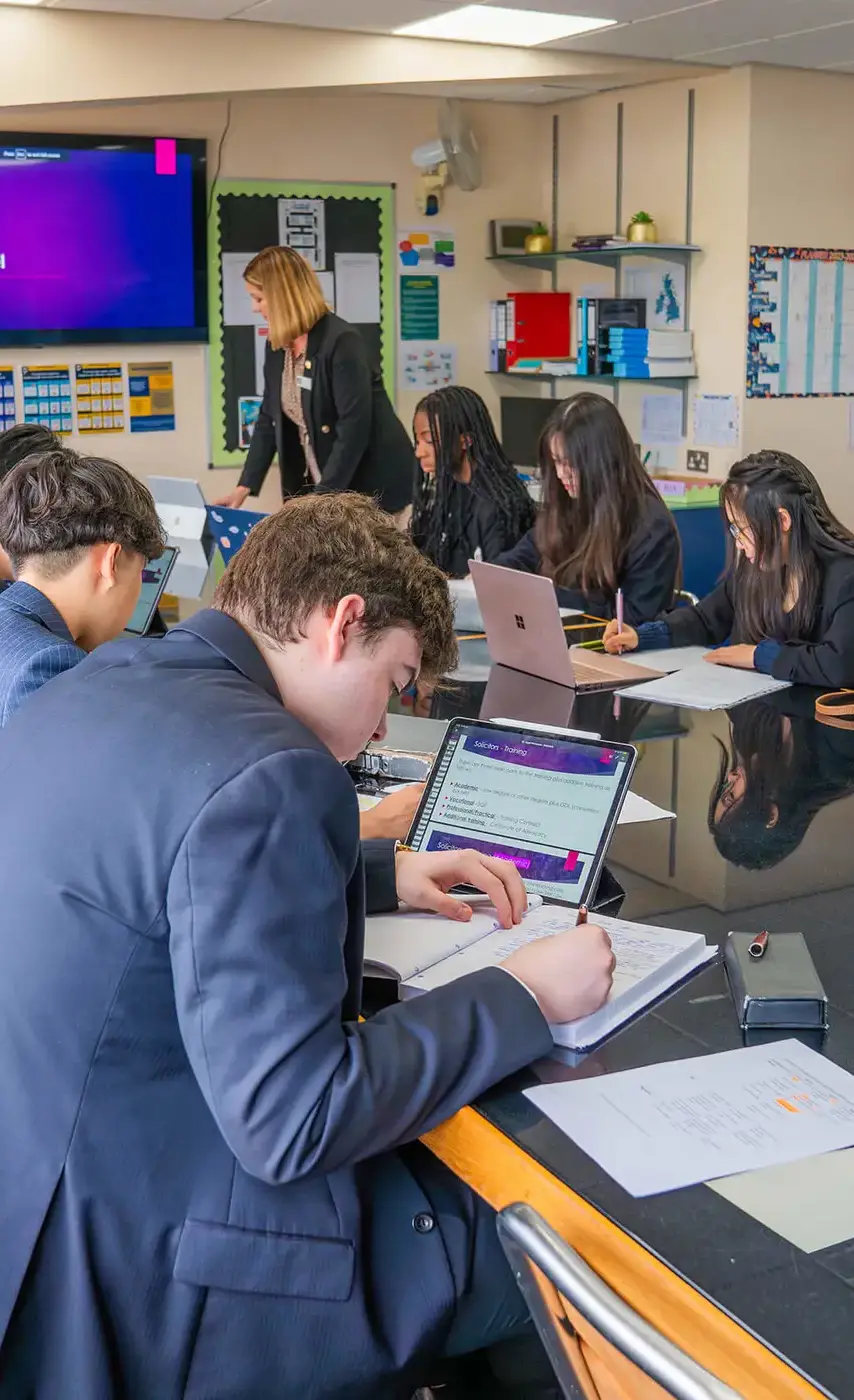






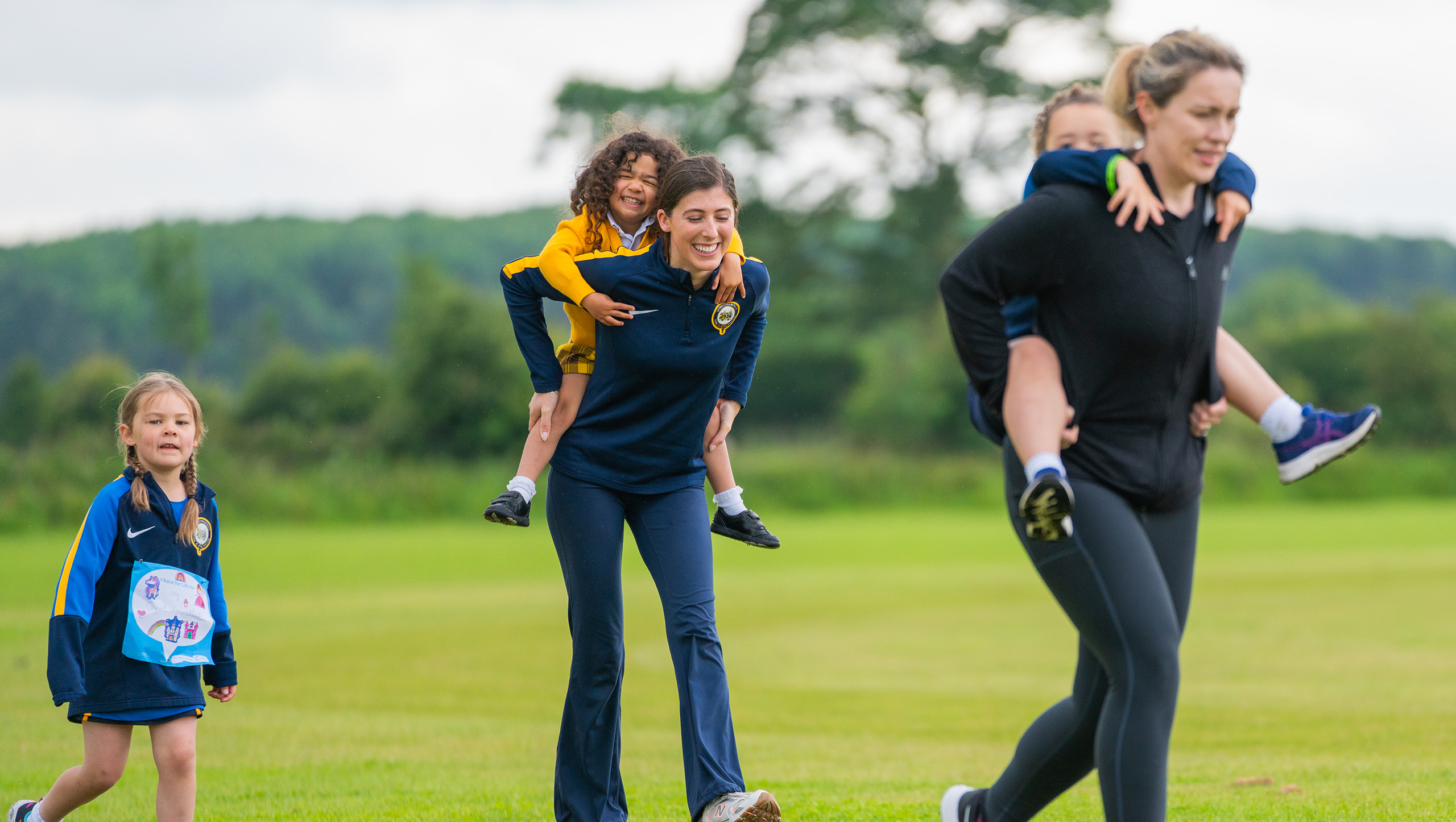
At Queen Ethelburga's Collegiate, our approach to student wellbeing is proactive and inclusive, built on positive relationships in which every student is known, listened to, supported and empowered to thrive – academically, socially, emotionally and physically.
We aim to provide a safe, secure and supportive community in which students can develop as considerate, confident, independent and resilient young people who respect and celebrate cultural diversity, and who are ready to contribute positively to society.
This whole-Collegiate commitment is underpinned by our core values of respect, responsibility and integrity, which shape the way students and staff work together to promote welfare, wellbeing and a positive community culture. Every member of academic, residential and operational staff at QE has a responsibility for student welfare and wellbeing.

Thrive at QE: Our Values
The Hill Standard sits at the heart of everything we do at QE. It takes its name from the original Queen Ethelburga's School in Harrogate, which stood on a hill – the determination required to reach the school became a metaphor for personal endeavour. Becoming the best we can with the gifts that we have may require effort, but the journey is always worthwhile.
Success at QE is not defined solely by academic achievement, but also by how we treat others, respond to challenges, contribute to our community, and use our gifts in service of something greater than ourselves. Our values help us build character, positive relationships and a community in which every student can learn, live and thrive.
Respect
We value ourselves, other people and the community around us – treating others with kindness and empathy, listening to different perspectives, and using technology (including mobile phones) responsibly and appropriately.
Responsibility
We take ownership of our actions, choices and commitments – engaging positively in Collegiate life, responding constructively to feedback, and seeking support when it is needed.
Integrity
We do the right thing, even when no one is watching – acting with honesty, fairness and courage, standing up for others, and learning from our mistakes.
We recognise that children and young people are continually learning and developing, and that mistakes are part of that journey. Our role is to provide clear expectations, positive relationships and appropriate support, so that every student can reflect, grow and become the best version of themselves.
Our Restorative Behaviour Pathway
When expectations aren't met, our response is rooted in the same values of respect, responsibility and integrity. We use restorative principles to help students reflect on their behaviour, understand its impact on others, and make positive changes, while maintaining consistently high expectations for everyone.
A Graduated, Supportive Pathway
Our first priority is always to help students make positive choices. Staff build strong relationships with students so that expectations are clear, and where a student's behaviour begins to fall short, our response is proportionate and supportive rather than punitive – starting with the lightest possible touch, such as a gentle reminder or conversation.
Where support is needed beyond this, our pathway is graduated: each step provides a little more structure and oversight, always with the aim of helping the student reflect, understand the impact of their choices, and get back on track. At every stage, the focus remains on reflection, accountability and positive change, rather than punishment for its own sake.
Reflection Comments and Tutor Meetings
Consequences are never automatic. Where a reflection comment is followed by continued poor choices, a proportionate consequence – such as a short conversation after the lesson, a department detention, loss of social time, or attendance at a support session – may follow, always aimed at helping the student understand impact and improve. Three or more reflection comments trigger a Tutor Reflection Meeting, giving the student a chance to talk things through with their Form Tutor. These meetings are developmental and restorative, helping students:
- Reflect on their behaviour and choices.
- Understand the impact of their behaviour on others.
- Repair relationships where needed.
- Identify strategies for improvement.
- Receive guidance and support.
Keeping Students Safe Online
Technology plays a significant part in the lives of young people, and helping students use it safely and positively is central to our wellbeing provision. We consider online safety across four areas of risk, in line with statutory guidance:
- Content – exposure to illegal, inappropriate or harmful material.
- Contact – harmful interaction with other online users.
- Conduct – online behaviour that increases the likelihood of, or causes, harm.
- Commerce – risks such as online gambling, phishing or financial scams.
Our network is protected by robust filtering and monitoring systems, overseen by the Head of Student Welfare. Students are taught how to use the internet and social media safely as part of their Personal Development curriculum, and are supported to build resilience, recognise risk, and make positive choices online.
A Phone-Free School Day
QE operates as a phone-free campus throughout the school day, in line with Department for Education guidance on mobile phones in schools. Day students, including those in the Sixth Form, hand in their mobile phones (and smartwatches) at daily form time; these are returned by the Form Tutor at the end of the school day, with sensible accommodation made for trips and fixtures.
Our boarders take this a step further: phones are left in house and are not brought into school during the day. Boarders collect their phones again after the school day, and follow an evening hand in routine appropriate to their age, helping to protect good sleep habits and healthy evening routines.
Working Together Against Bullying
Bullying in any form is never tolerated at QE, whether it takes place on campus, in boarding, during a school activity, online, or away from the Collegiate. Our approach is both preventative and responsive: students are encouraged to act as upstanders, speaking up if they see behaviour that is unkind, discriminatory or unsafe, and every concern is treated seriously, investigated fairly, and addressed sensitively and without delay.
Prevention
Prevention is built into everyday Collegiate life. Bullying is addressed regularly through assemblies, Personal Development lessons and Collegiate-wide awareness weeks, helping students understand their social and moral responsibilities and how to stay safe online. Our Anti-bullying Council, whose members lead assemblies and help raise awareness, links the staff and student community in shaping a respectful culture. Our peer mentoring system plays an important part here too, with trained older students offering everyday support, guidance and a friendly, familiar face for younger students – helping to build the kind of positive relationships that make bullying less likely to take hold.
Reporting and Support
Students can report a concern to any member of staff they trust, or use the confidential “virtual” Bully Box in the QE Connect app. Support is available for every student involved – which may include restorative work, counselling, peer mentoring or Key Worker support – and incidents are recorded and monitored so that patterns can be identified and address.